

I'm not from the food industry. We already established that.
Before fiboli, I'd never formulated a product, never dealt with food regulations, never thought about shelf stability or supply chains.
I was just someone sitting on a beach in Sardinia, eating my third pastry of the day, wondering why there wasn't a single high-fibre option anywhere.
And then it hit me: the problem isn't just in Italy. It's everywhere. Including Canada.
The Fibre Gap We've All Normalized
Canadians are supposed to eat 25-38g of fibre per day.
Most of us get about 10g at most.
That's a 15-28g gap. Every single day. For basically everyone.
And we've just... accepted it?
We normalize the gut issues, the energy crashes, the fact that we're hungry an hour after breakfast. We blame it on stress or sleep or getting older.
But a lot of it is just: not enough fibre.
I didn't know this until I started researching. I thought fibre was just something that helped you poop. Turns out it does about a dozen other things your body needs; blood sugar regulation, gut health, keeping you full, lowering cholesterol.
But nobody talks about it. And more importantly, nobody's made it easy to actually get enough. Protein is everywhere, everyone is drowning in protein.
When Fibre Comes With Baggage
Okay, to be fair: there are high-fibre products in Canada.
But here's the problem; most of them come with a bunch of stuff you don't actually want.
I started reading labels. Really reading them. A long time ago.
High-fibre protein bars? Loaded with sugar alcohols.
High-fibre cereals? Sweeteners, "natural flavours," and a dozen additives I couldn't pronounce.
High-fibre shakes? Meal replacements? Cheap fillers, artificial sweeteners, and that weird chemical aftertaste.
The fibre was there. But it was buried under layers of junk OR it was made in a lab, highly transformed and isolated.
And I get why; adding fibre without making something taste terrible is hard. So brands compensate with sweeteners, flavours, and fillers to mask it.
But that defeats the whole point.
If I'm trying to eat cleaner, I don't want to trade one problem (no fibre) for another problem (a bunch of additives my gut doesn't recognize).
So I decided: what if we just... didn't do that?
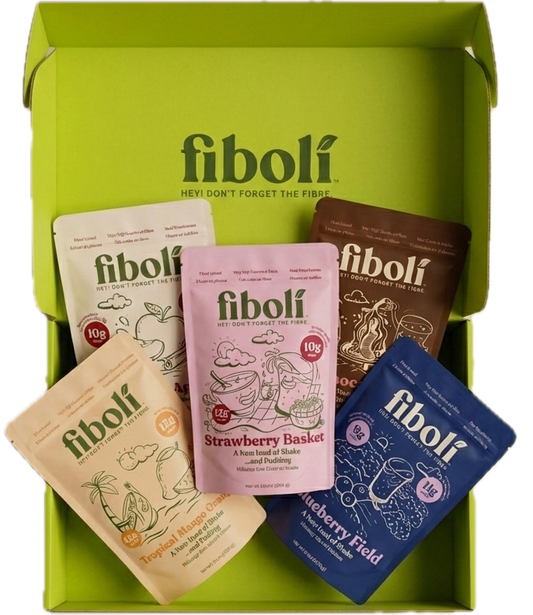
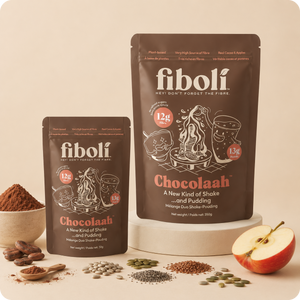
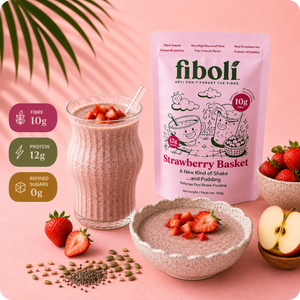
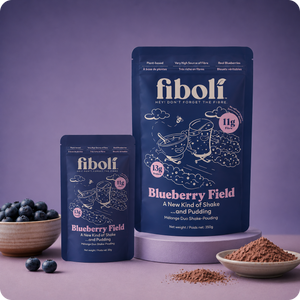
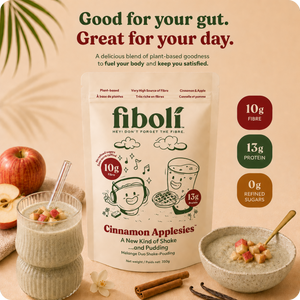
Real fruit for flavour. No sweeteners. No sugar alcohols. No "natural flavours" (which aren't actually natural).
Just real fibre, protein, and ingredients you'd find in your kitchen.
Yes, it costs more to make. Real fruit costs more than flavouring. Chia and flax cost more than cheap fillers.
But it's still cheaper than a Starbucks drink. And unlike a Starbucks drink, it actually does something for your body.
The Breakfast Problem
Canadian breakfast is built on speed.
Grab a bagel. Toast some bread. Hit the drive-thru. Pour some cereal.
High carb, low fibre, fast to eat, easy to regret later.
And the "healthy" options? They're either:
- Time-consuming (overnight oats you have to remember to make)
- Expensive (smoothie bowls that cost $12)
- Boring (bran cereal that tastes like nothing)
If you're busy - which most of us are - breakfast becomes whatever's fastest.
This isn't a personal failing. It's a design problem. We are fibre deprived society.
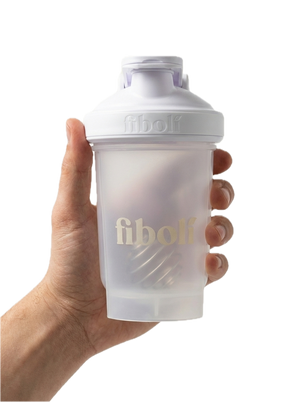
Nobody's built something that's high in fibre, fast, portable, and doesn't taste like cardboard.
So I did.